
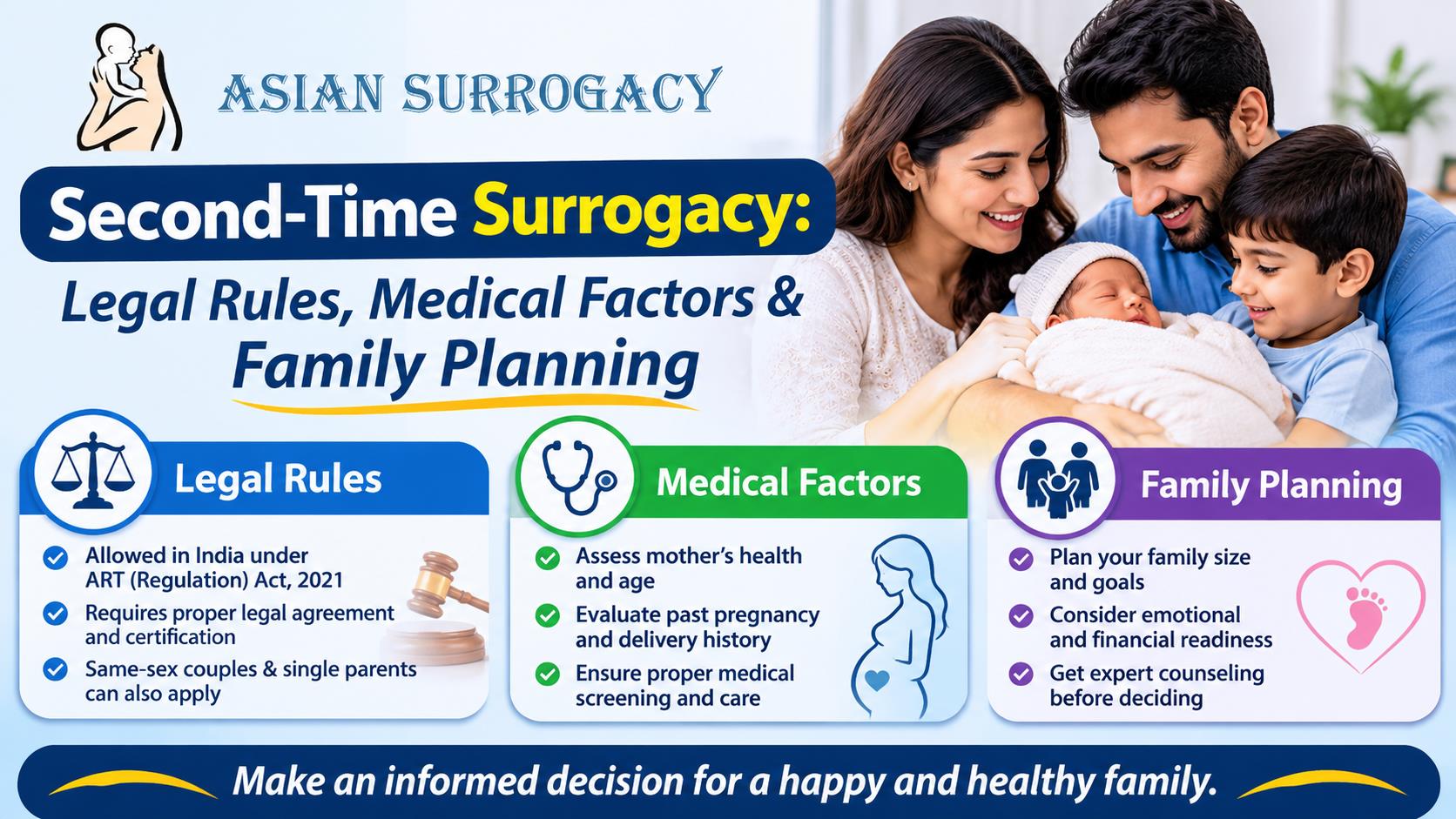
Second-Time Surrogacy: Building a Sibling Through the Same Journey
For many parents, welcoming a child through surrogacy is one of the most meaningful experiences of their lives. It is a journey filled with hope, patience, emotional strength and the joy of becoming a family. After experiencing this journey, some parents may dream of expanding their family and giving their child a brother or sister.
This brings up an important question: Can parents consider surrogacy again to welcome a second child?
Second-time surrogacy involves medical, emotional and legal considerations. While the idea of building a family through another surrogacy journey can be meaningful, the eligibility requirements must be understood carefully, particularly in India, where surrogacy is regulated by specific legislation.
In this article, we explo re the emotional aspects of expanding a family, the medical considerations and the legal position of second-time surrogacy in India.
What Is Second-Time Surrogacy?
Second-time surrogacy refers to the consideration of another surrogacy journey by intended parents who have previously welcomed a child through surrogacy.
For some families, the desire to have another child comes from wanting their existing child to experience the bond of growing up with a sibling. Parents may wish to create more shared family experiences, celebrate milestones together and build lasting sibling relationships.
However, a previous successful surrogacy journey does not automatically make someone eligible for another surrogacy procedure. Medical circumstances, legal requirements and individual family situations must all be considered.
Why Do Parents Consider Having Another Child Through Surrogacy?
The decision to expand a family is deeply personal. Parents may have different reasons for considering another child.
1. The Desire to Give Their Child a Sibling
Many parents imagine their child growing up with a brother or sister. They hope their children will share childhood memories, support each other and develop a lifelong bond.
2. A Positive Previous Surrogacy Experience
Parents who have experienced a successful surrogacy journey may have positive memories of the medical support, counselling and guidance they received throughout the process.
3. Growing Family Aspirations
As families grow and circumstances change, parents may develop new hopes and expectations for their family life.
4. Emotional Readiness
Some parents feel emotionally prepared to welcome another child after adjusting to parenthood and understanding the responsibilities involved.
These feelings are understandable, although emotional readiness alone does not establish medical or legal eligibility for another surrogacy procedure.
Is Second-Time Surrogacy Legal in India?
This is one of the most important considerations for families exploring another surrogacy journey.
Under India's Surrogacy (Regulation) Act, 2021, an intending couple generally must not have a surviving child, whether biological, adopted or born through an earlier surrogacy procedure, to qualify for surrogacy.
There is a specific exception. A couple who already has a surviving child may qualify for surrogacy if that child is mentally or physically challenged or suffers from a life-threatening disorder or fatal illness with no permanent cure, subject to the required medical certification from a District Medical Board and approval from the Appropriate Authority.
Therefore, having a previous child through surrogacy generally prevents a couple from undertaking another surrogacy procedure simply to have a sibling for their child.
Families should obtain individual legal and medical guidance before making any decisions. Previous surrogacy success does not create automatic eligibility for a second surrogacy.
Can the Same Surrogate Mother Carry Another Child?
Another common question concerns whether the same surrogate mother can participate in a second surrogacy journey for the same family.
Under Section 4 of the Surrogacy (Regulation) Act, 2021, a woman cannot act as a surrogate mother more than once in her lifetime.
This means the same woman cannot legally undertake another surrogacy procedure, even if she previously helped the family welcome a child and is willing to participate again.
The law also requires the surrogate mother to meet the prescribed medical, psychological and eligibility conditions.
The rights, health, safety and informed consent of the surrogate mother must remain central throughout the process.
Medical Considerations Before Another Pregnancy Journey
Even when families are exploring their reproductive options, medical evaluation is essential.
A fertility specialist may review previous IVF records, reproductive health, embryo-related medical information and any underlying conditions.
Important considerations may include:
- Previous IVF and embryo transfer history.
- Medical conditions affecting pregnancy.
- Genetic and reproductive health assessments, where indicated.
- Previous pregnancy and delivery records.
- Physical and emotional well-being.
- Medical advice regarding future reproductive options.
A specialist can explain which medical options are appropriate based on the family's circumstances and applicable Indian regulations.
Emotional Considerations: Preparing Your Family for a New Chapter
The desire to expand a family is not only a medical decision. It also involves emotional preparation and understanding the needs of an existing child.
Parents may consider how they would introduce the idea of a sibling, explain family relationships in an age-appropriate way and create a supportive home environment.
Open communication between partners, professional counselling when needed and realistic expectations can help families navigate reproductive decisions.
Every family has a different story. There is no single timeline or expectation for expanding a family.
The Importance of Choosing the Right Fertility Guidance
Surrogacy involves medical procedures, legal documentation, ethical responsibilities and emotional considerations. Therefore, families should seek guidance from qualified fertility specialists and professionals familiar with India's surrogacy regulations.
Before considering any procedure, it is important to understand eligibility requirements, medical indications, legal approvals and the rights of everyone involved.
A responsible fertility consultation should provide clear information rather than promises of guaranteed outcomes or procedures that may not be legally permitted.
Conclusion
The dream of giving a child a sibling is meaningful for many parents. A previous surrogacy journey may remain a special part of a family's story, bringing memories of hope, courage and parenthood.
However, second-time surrogacy in India is subject to strict legal restrictions. Couples who already have a surviving child generally cannot pursue another surrogacy procedure, except under the specific medical exception provided by law and with the required approvals.
At Asian Surrogacy, we believe that every family deserves access to clear, responsible and compassionate fertility information. Understanding the medical and legal aspects is an important first step towards making informed decisions about your family's future.
Every family-building journey deserves understanding, dignity and the right guidance.
FAQs
1. Can a couple have a second child through surrogacy in India?
Generally, no. Indian law restricts surrogacy for couples who already have a surviving child, whether biological, adopted or born through surrogacy. A specific exception applies to certain serious medical conditions affecting the existing child, subject to certification and approval.
2. Can the same surrogate mother help the family again?
No. Under India's Surrogacy (Regulation) Act, 2021, a woman cannot act as a surrogate mother more than once in her lifetime.
3. Does a previous successful surrogacy guarantee eligibility for another procedure?
No. Previous success does not provide automatic eligibility. Every proposed procedure must meet current medical and legal requirements.
4. What should parents consider before planning another child?
Parents should consider medical circumstances, family readiness, reproductive health and applicable legal requirements. A qualified fertility specialist and legal professional can provide appropriate guidance.
5. What is the medical exception for second-time surrogacy in India?
An intending couple with an existing surviving child may qualify under the specific exception if that child has a qualifying mental or physical disability or a life-threatening disorder or fatal illness with no permanent cure. A District Medical Board certificate and Appropriate Authority approval are required.
Contact Asian Surrogacy today to learn more about our surrogacy programmes and legal support.
📍 403, 4th Floor, Signature Business Park, Postal Colony Road, Near Chembur Mono Rail Station, Chembur, Mumbai – 400071